空き家のリノベーション
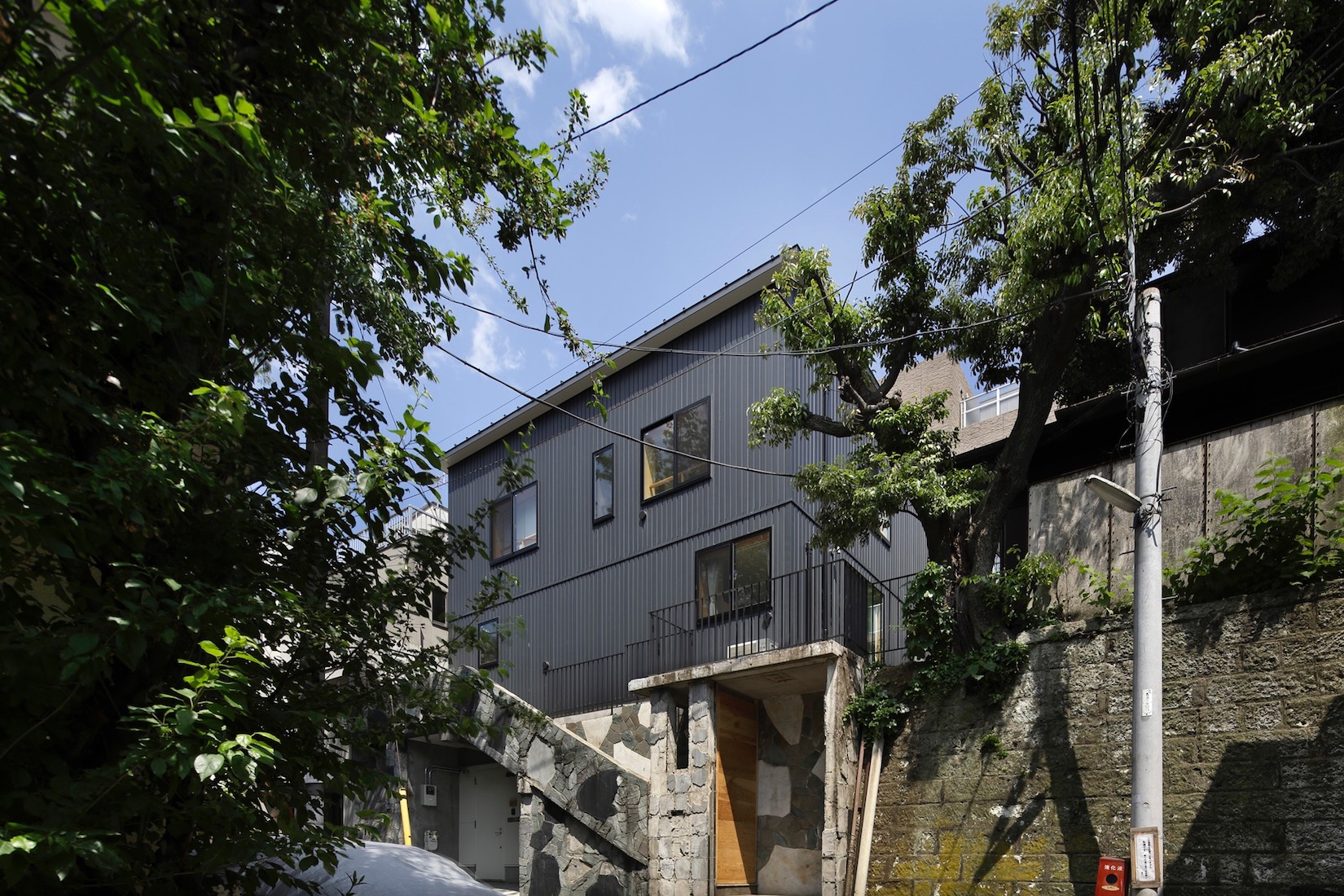
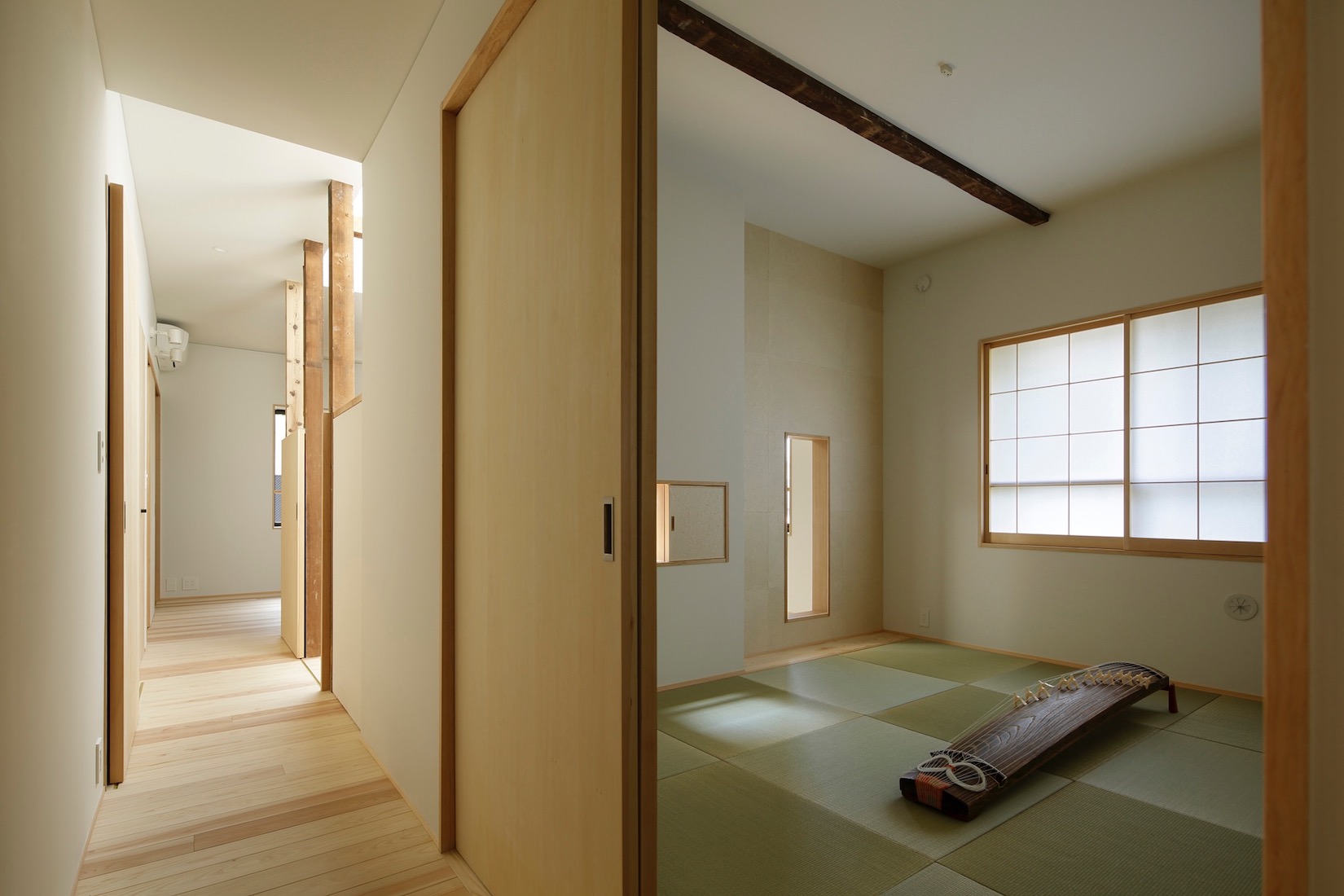
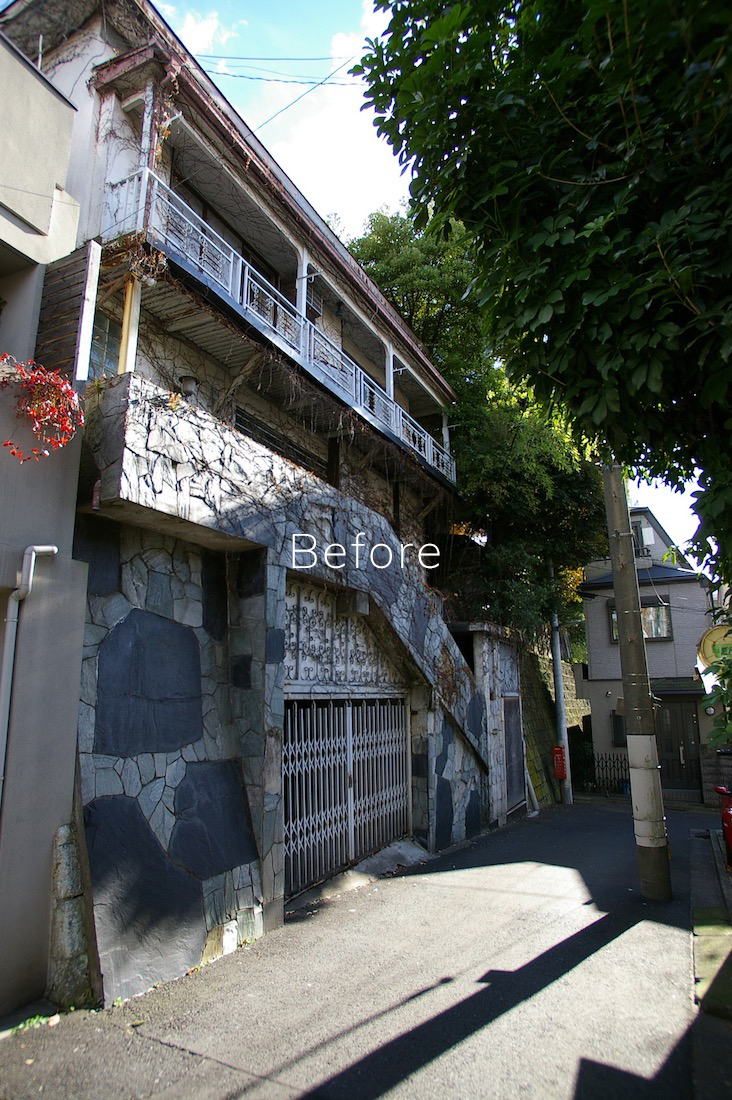
築40年木造住宅のフルリノベーションです。既存は20年空き家だったこともあり、状態は悪く相当の補修等が必要でしたが、前面道路が狭く、また崖地であって大規模な工事が困難だったことから、新築ではなく改修を選択しました。
改修と決まってから大きく6つの段階を踏みました。第1段階は既存建物の採寸と図面化、第2段階は間取りや空間構成を決める基本設計、第3段階はスケルトンまでの解体、第4段階は構造体位置等を正確に反映させた実施設計、第5段階として見積およびコスト調整、そして第6段階として実際の改修工事です。この段階全てにおいて様々な想定外があり、その都度クライアントも設計者、施工者も色んな判断が求められました。今回は既存状態が悪く、特に想定外が多い難しい物件でしたが、構造設計者の検討と施工会社の高い技術で基本設計段階での空間構成をほぼ実現する事が出来ています。
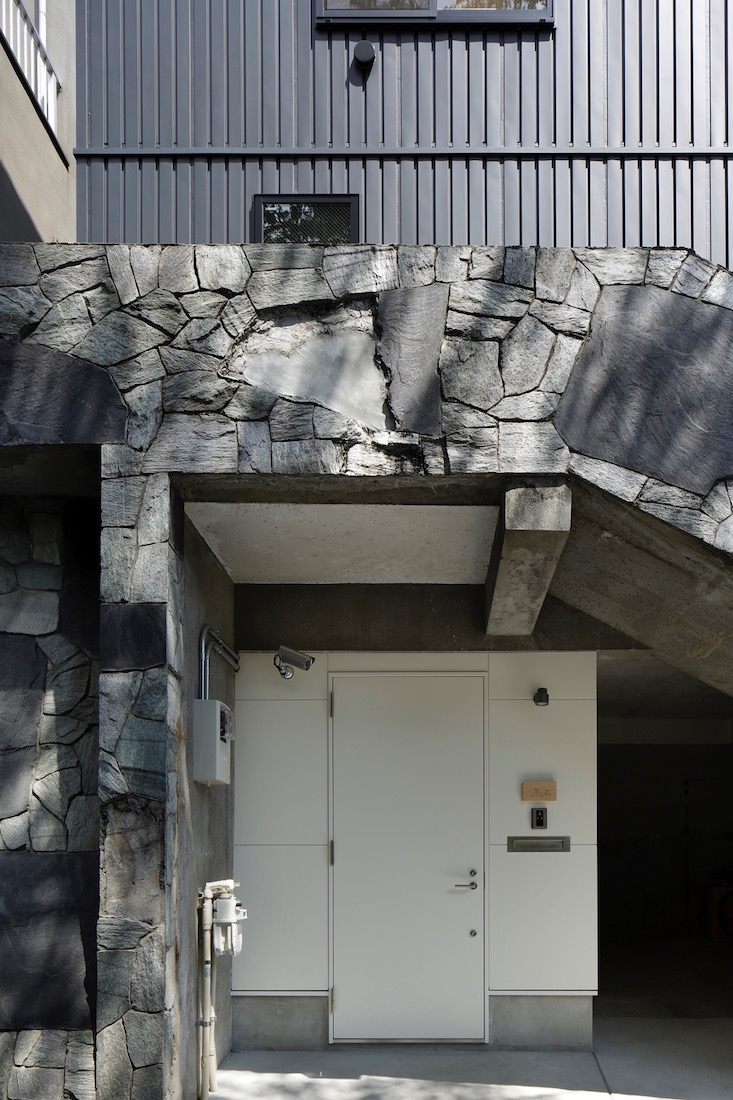
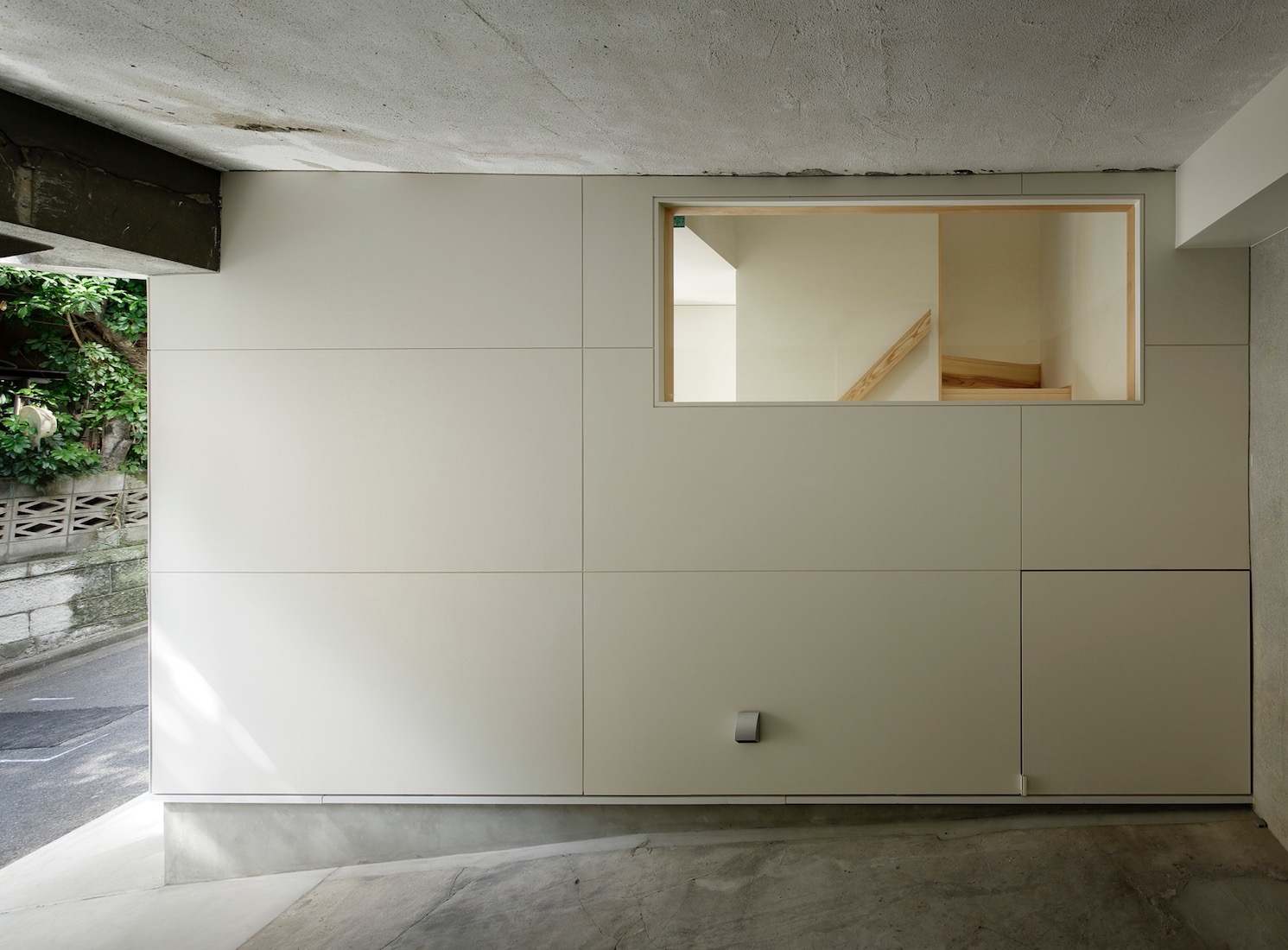
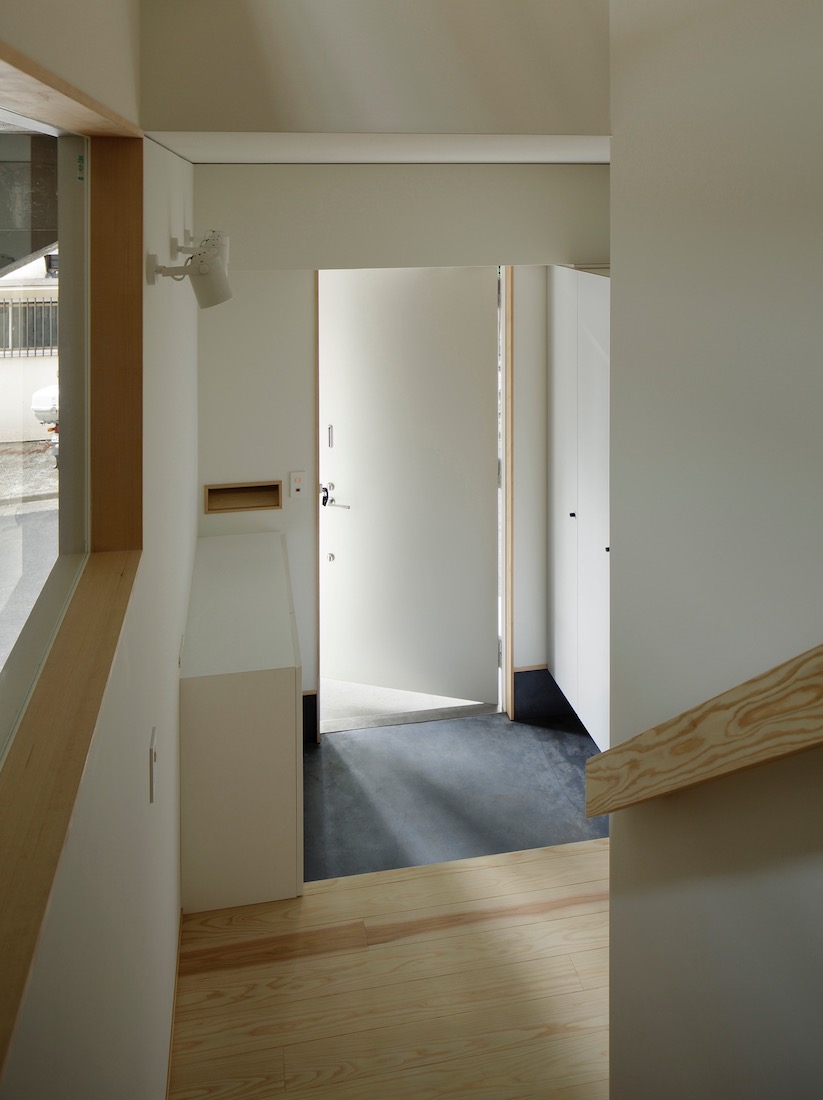
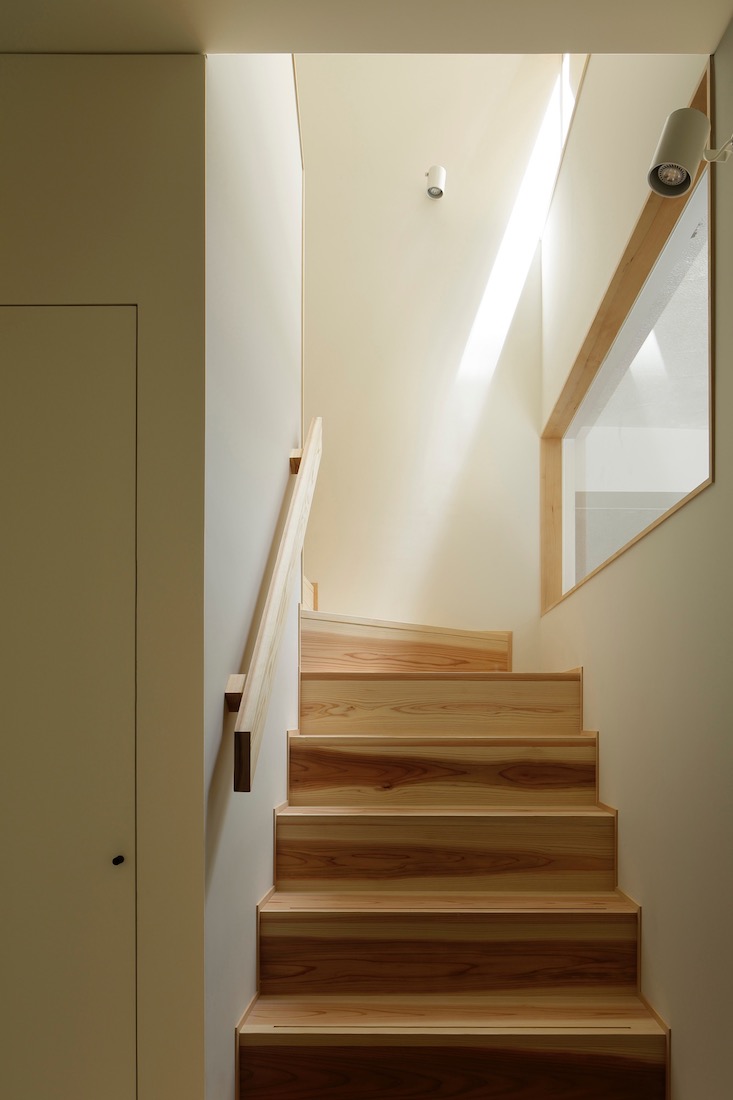
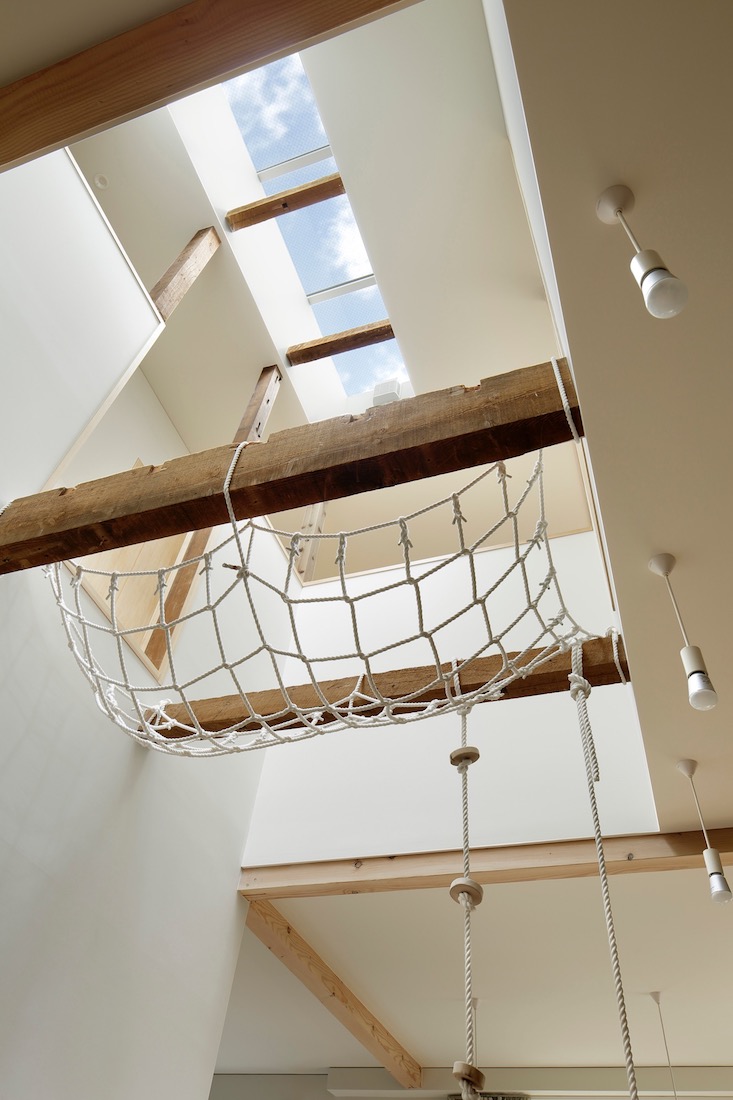
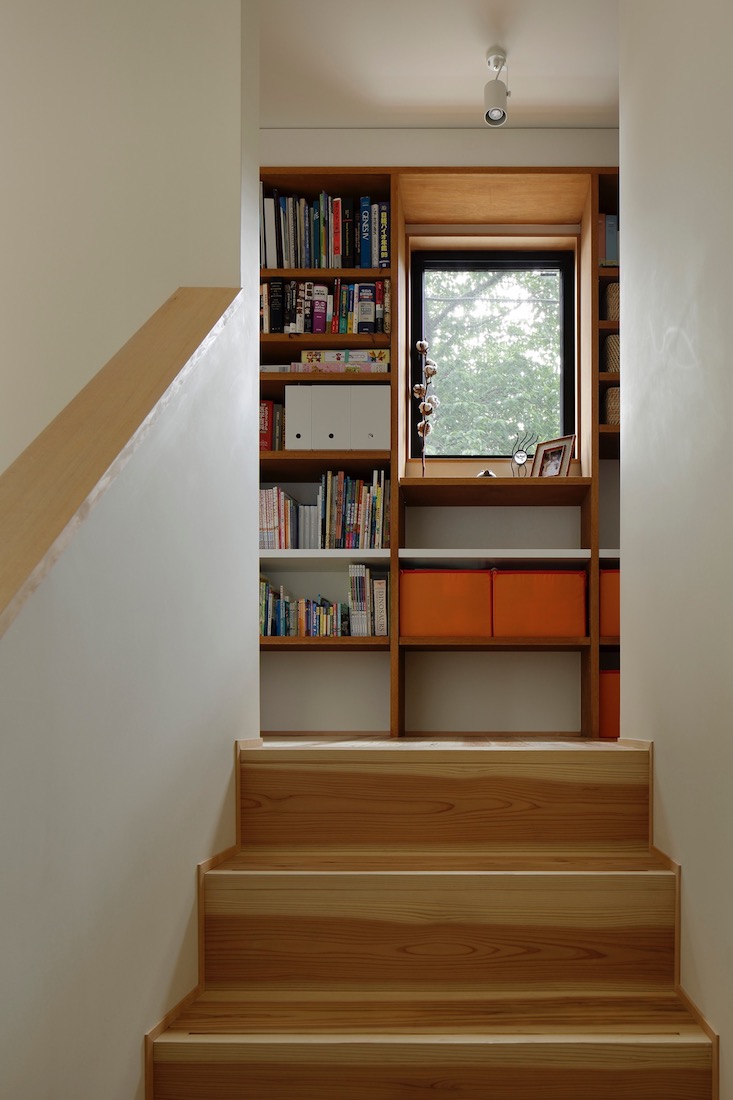
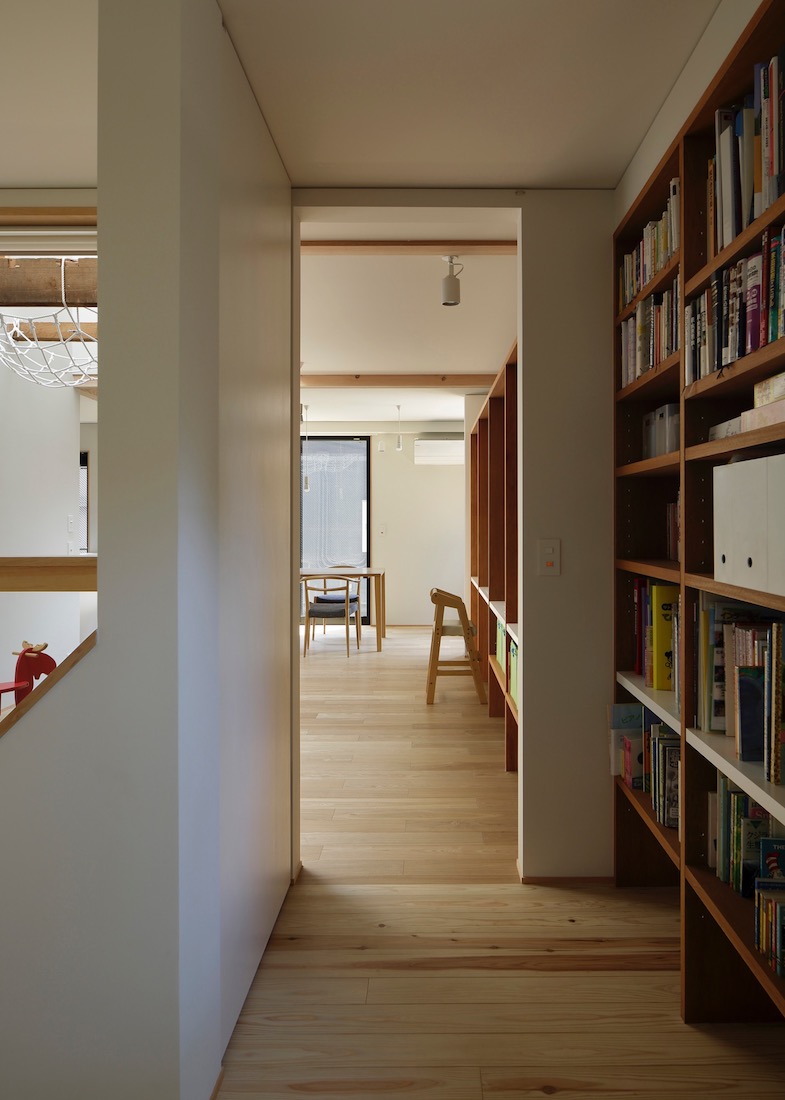
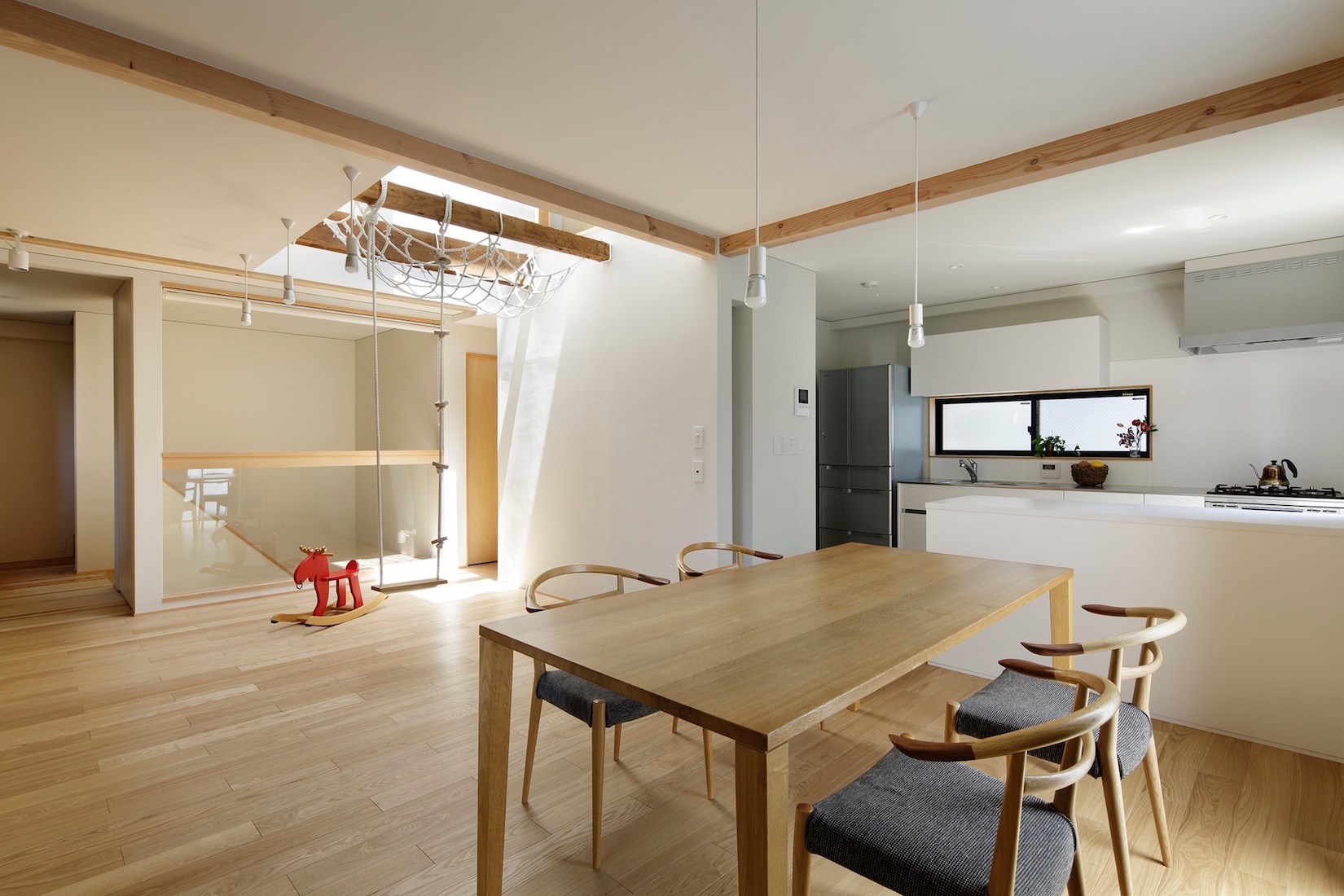
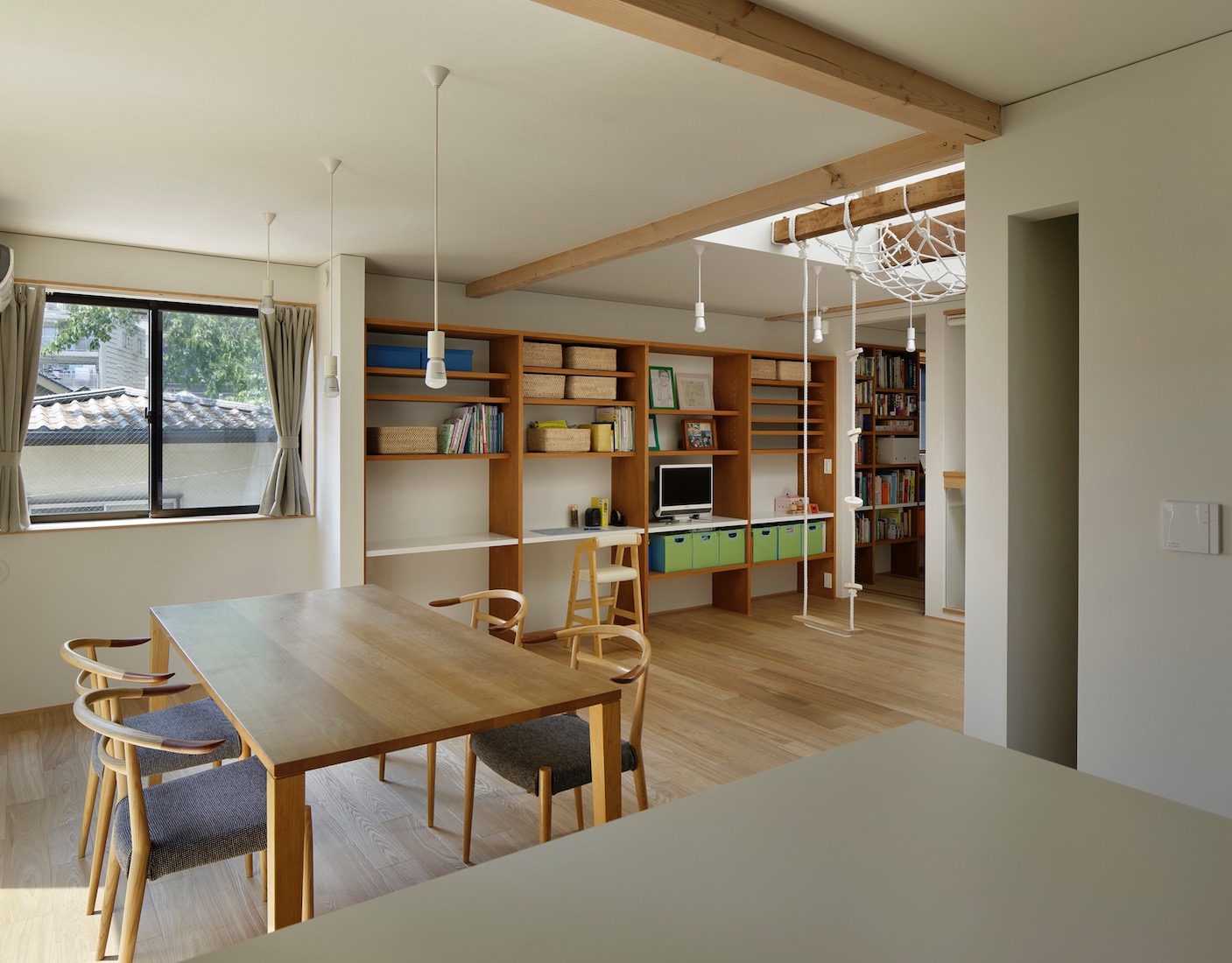
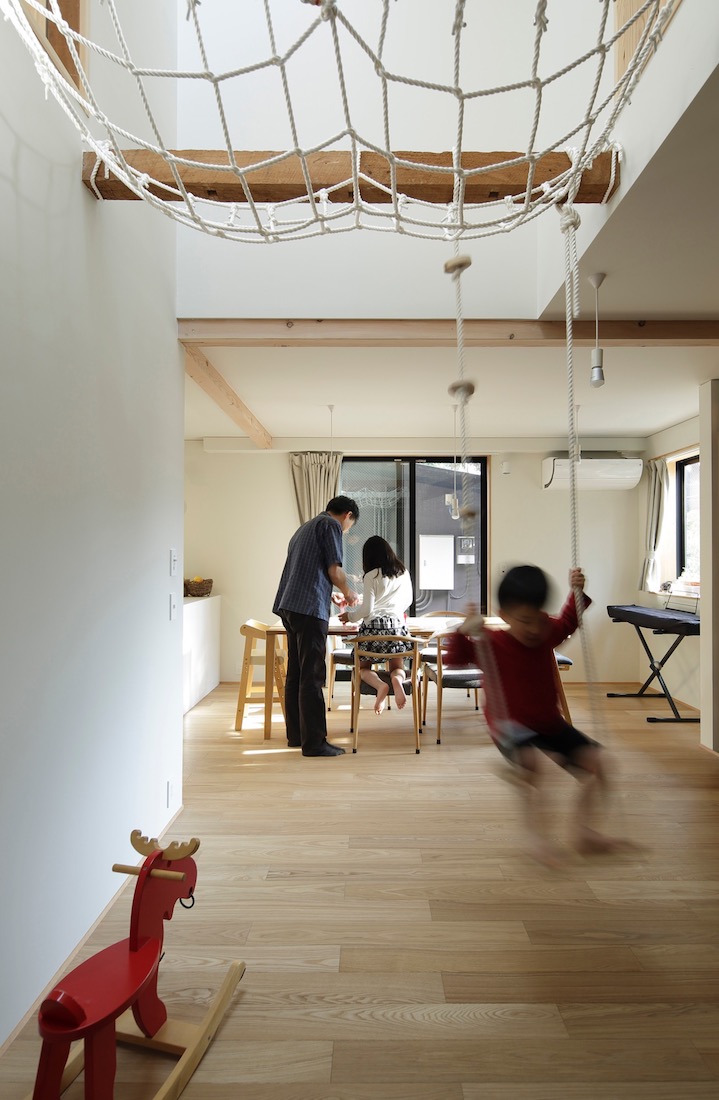
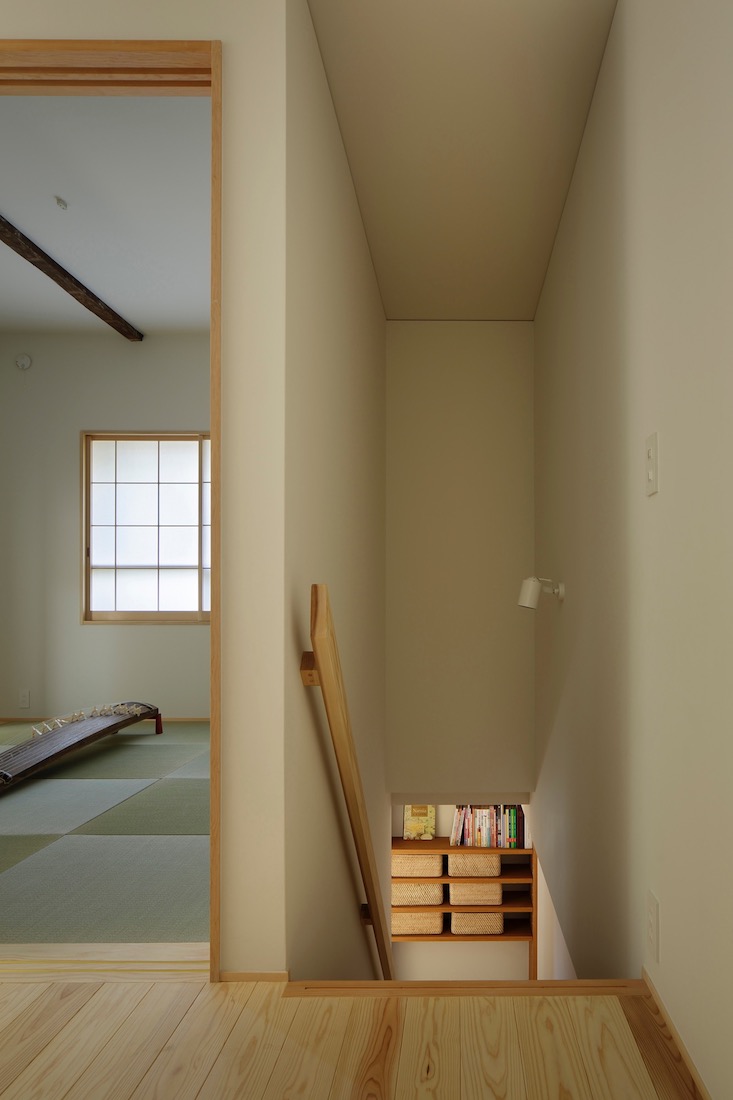
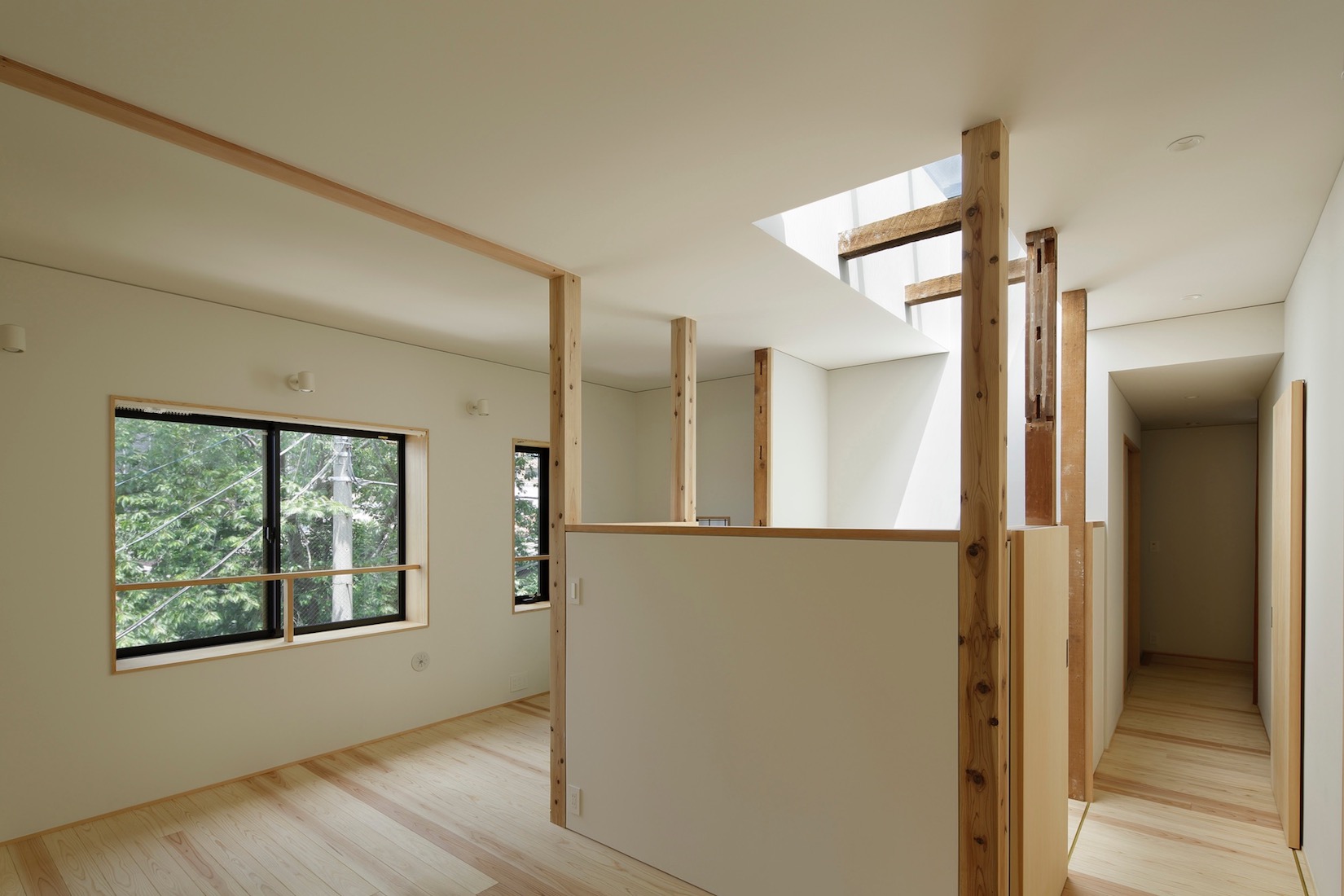
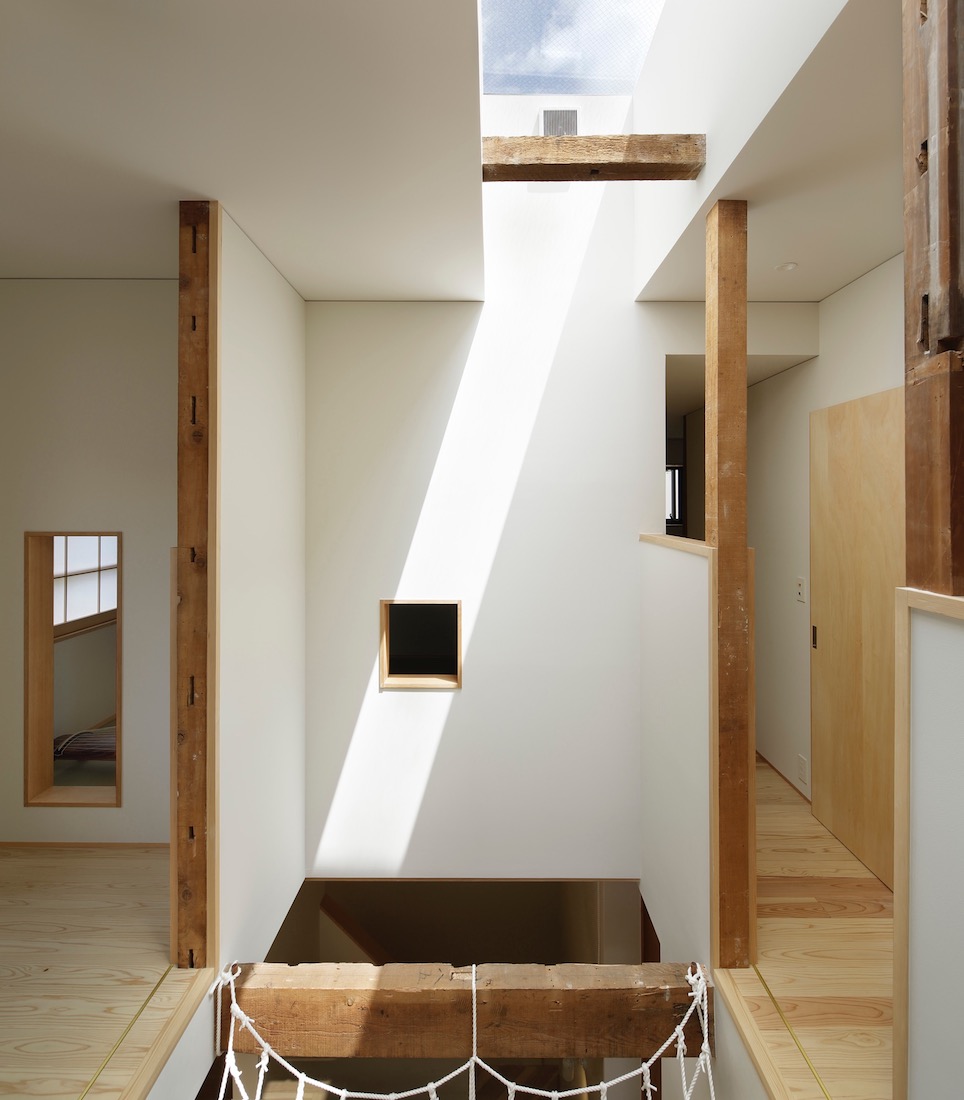
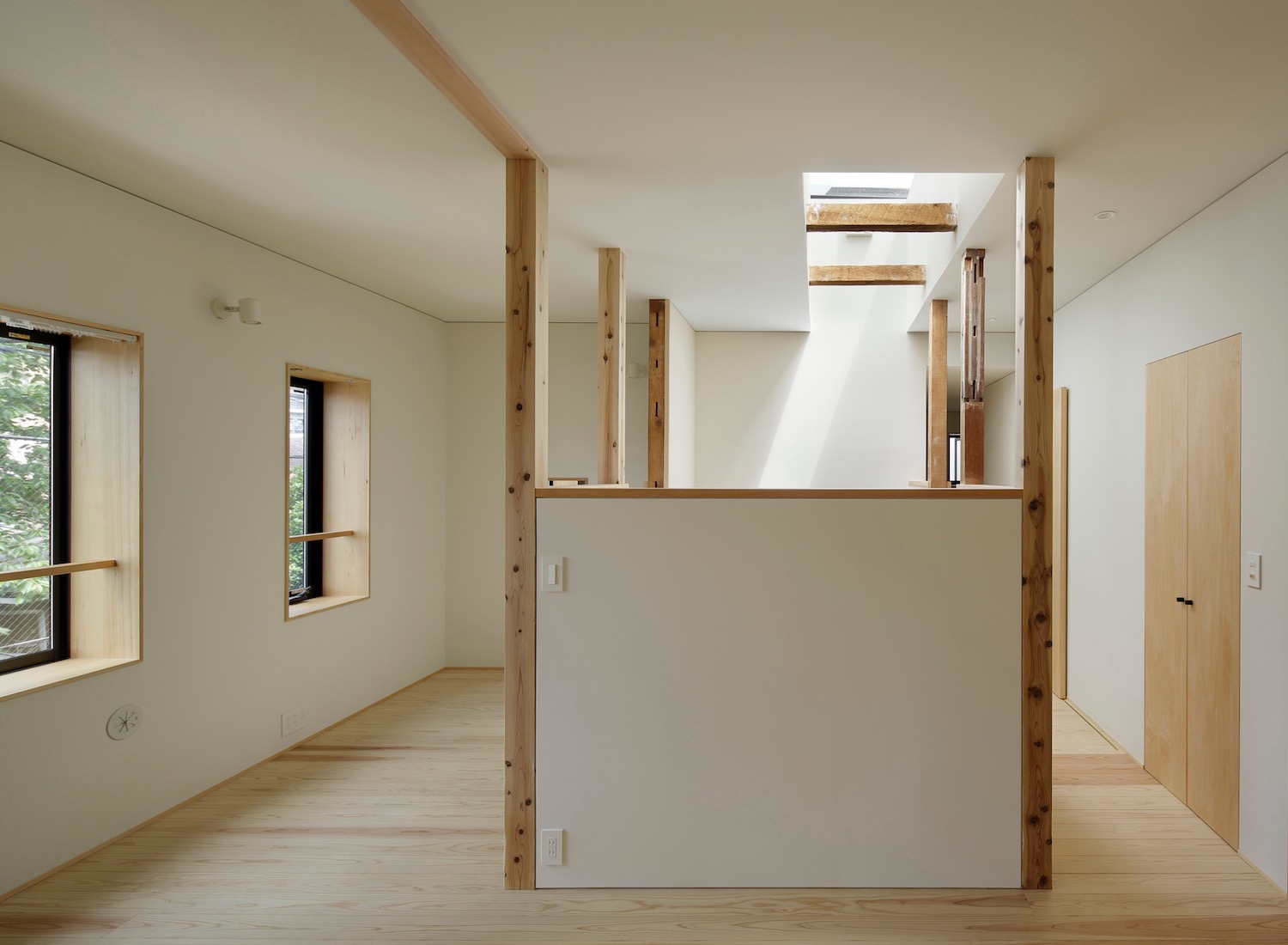
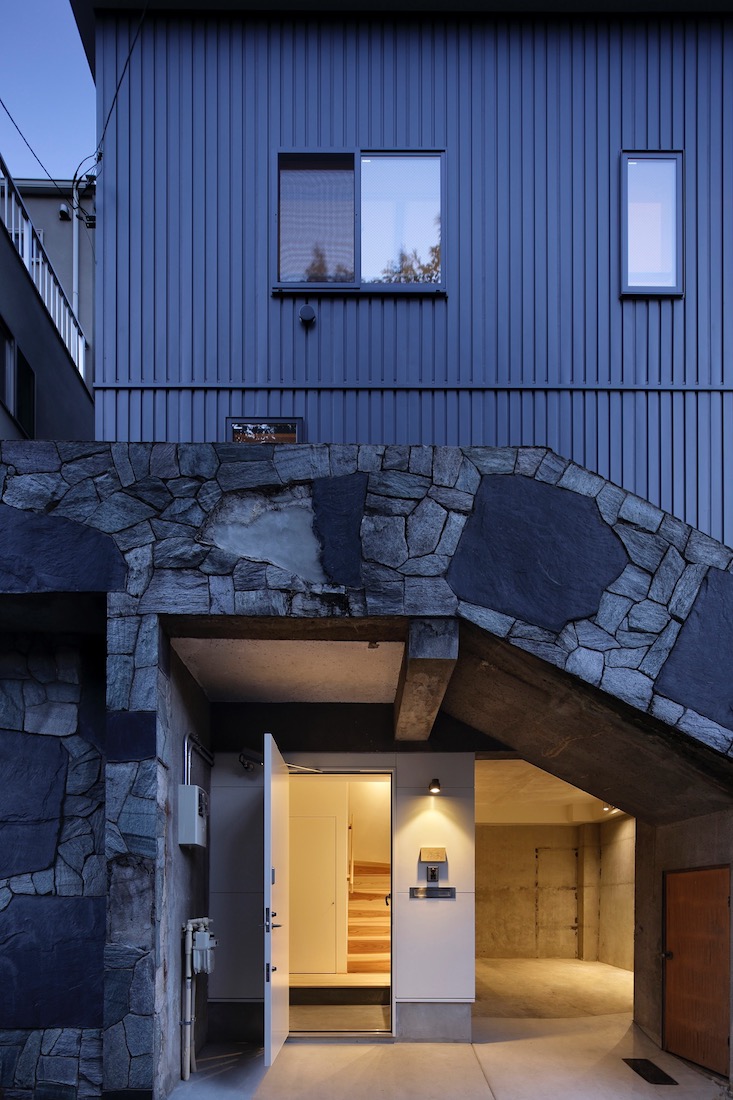
まずは道路に面する地下1階の駐車場を縮小し、玄関を新設して残りを駐輪スペースとしました。元々は外部階段で1階まで上ってから玄関にアクセスする形でしたが、道路から直接入れたほうが便利です。そこで地下1階と1階との間のコンクリートスラブに穴をあけて補強をしながら新たに階段を設置しています。また地下に光を入れるために1、2階の間に吹抜けと屋根にトップライトを新たに設けました。トップライトから入る光は、吹抜けと階段を介して家全体を明るくし、吹抜けは上下の空間をつなげると共に「住まいの中心」をつくりだして、家族が自然と集まるリビングダイニングをつくりだしています。
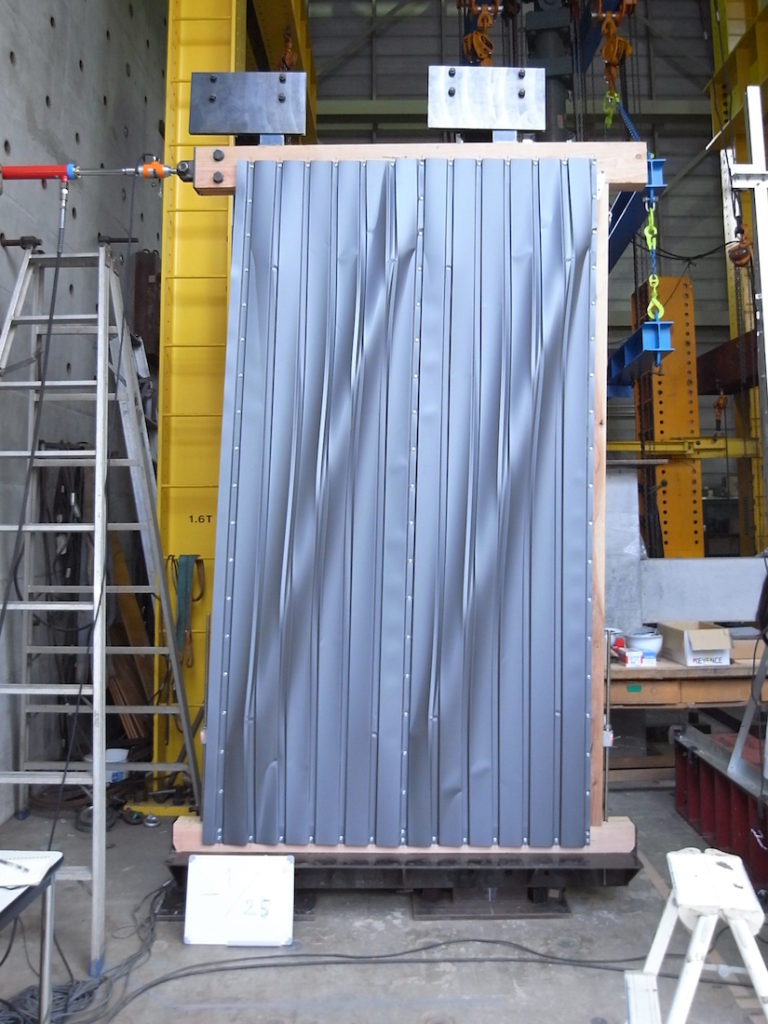
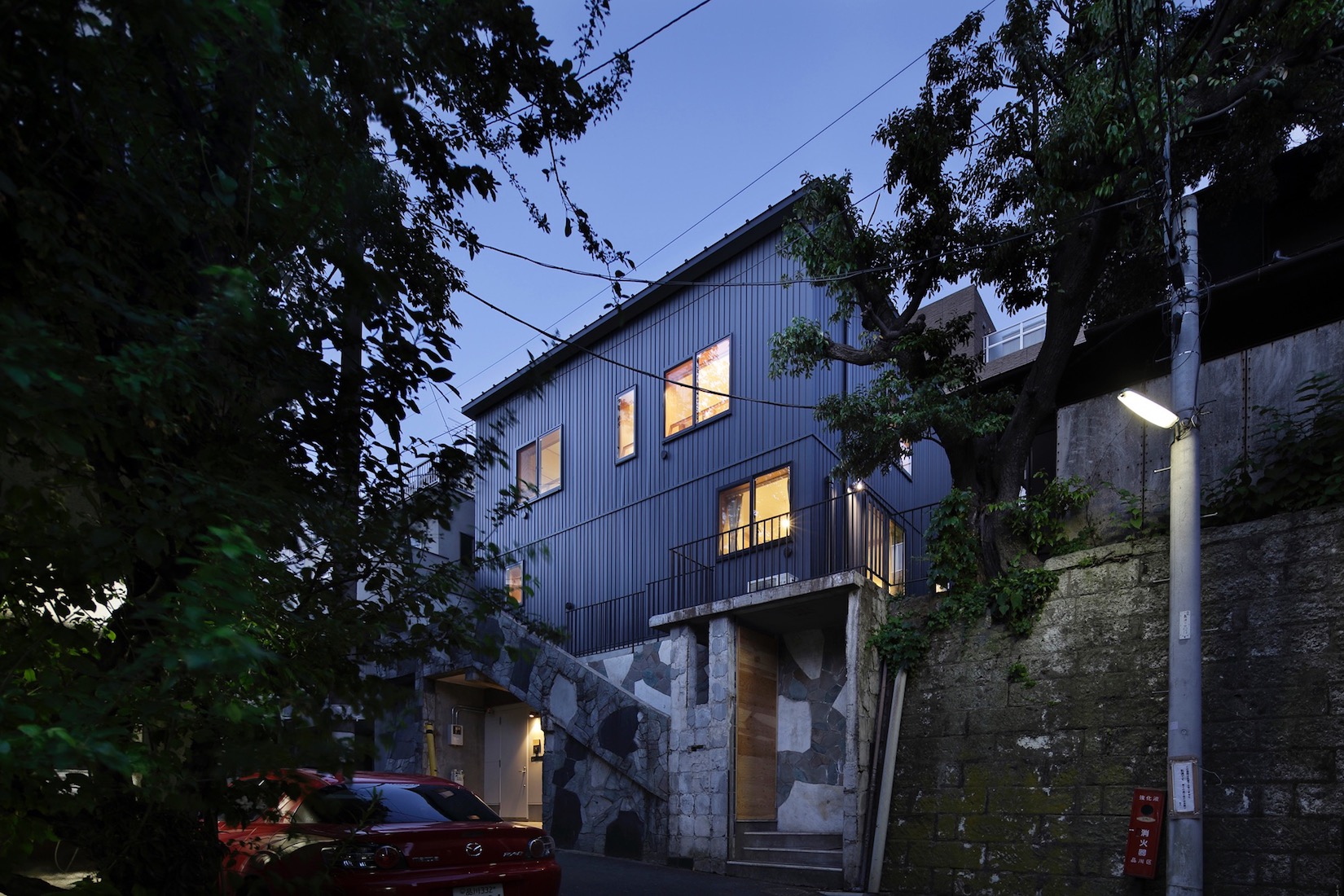
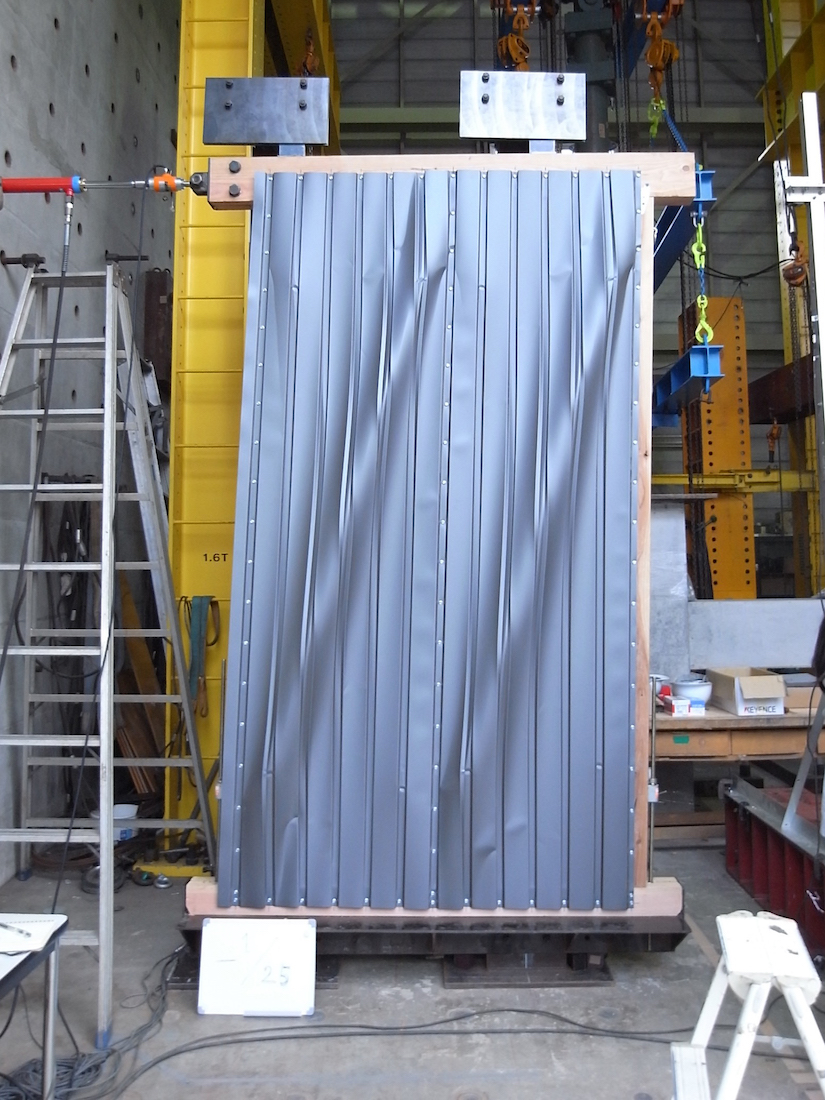
内部を自由に間仕切るために、耐震壁を全ての外周に施しました。その方法としてガルバリウム角波鋼板を耐震壁の補強兼仕上げとして用いています。特殊なビスで既存の柱梁に止めて、ビス穴からの止水がしやすいように縦角波鋼板を用いていますが、この構法は大学の研究室で破壊実験を行って耐震性能を確認しています。
このように、クライアント、設計者、施工者が根気よく努力して、様々な想定外をクリアーする技術的なアイデアとそれを実現する手法を、その都度あみ出し行った上でこの強固で心地よい住まいは実現しています。
所在地:東京都品川区
用途:一戸建ての住宅
構造・規模:RC造+木造在来工法・地下1階、地上2階
敷地面積:116㎡
延床面積:155㎡
構造設計:EQSD一級建築士事務所
施工会社:青
築年数:40年
竣工年:2014年
写真撮影:繁田諭
Renovation of a vacant house
This is a full renovation of a 40-year-old wooden house. The existing house had been vacant for 20 years, so it was in poor condition and required significant repairs, but the road in front was narrow and it was on a cliff, making large-scale construction difficult, so we chose to renovate instead of building a new house.
After deciding to renovate, there were six major steps. The first step was to measure and draw up plans for the existing building, the second step was to create a basic design that determined the layout and spatial composition, the third step was to demolish the building down to the skeleton, the fourth step was to create a detailed design that accurately reflected the structure’s position, the fifth step was to estimate and adjust costs, and the sixth step was to carry out the actual renovation work. There were various unexpected things at each of these steps, and each time, the client, the designer, and the contractor were required to make various decisions. This time, the existing condition was poor, and it was a difficult property with many unexpected things, but thanks to the structural designer’s consideration and the construction company’s high level of technology, we were able to almost realize the spatial composition at the basic design stage.
First, we reduced the size of the parking lot on the first basement floor facing the road, built a new entrance, and used the remaining space as a bicycle parking space. Originally, the entrance was accessed by climbing up to the first floor via an external staircase, but it is more convenient to enter directly from the road. Therefore, we drilled holes in the concrete slab between the first basement floor and the first floor, reinforced it, and installed a new staircase. In order to let light into the basement, we also installed a new atrium between the first and second floors and a skylight on the roof. The light coming in from the skylight brightens the entire house through the atrium and stairs, and the atrium connects the upper and lower spaces while creating the “center of the home,” creating a living and dining room where the family naturally gathers.
In order to freely divide the interior, earthquake-resistant walls were installed on the entire perimeter. To do this, galvalume corrugated steel sheets were used as both reinforcement and finish for the earthquake-resistant walls. Special screws are used to fasten the existing columns and beams, and vertical corrugated steel sheets are used to make it easier to stop water from the screw holes. This construction method was confirmed to have earthquake-resistant performance through destructive experiments in a university laboratory.
In this way, the client, designers, and builders worked tirelessly together to come up with technical ideas to overcome various unexpected obstacles and the methods to realize them, resulting in the creation of this sturdy, comfortable home.
Site : Shinagawa-ku, Tokyo
Use : Private house
Structure : RC + wood
Floors : Basement + 2 upper floors
Site area : 116sqm
Total floor area : 155sqm
Structural design : EQSD
Construction company : Ao
Age of building : 40 years
Completion year : 2014
photo by Satoshi Shigeta